
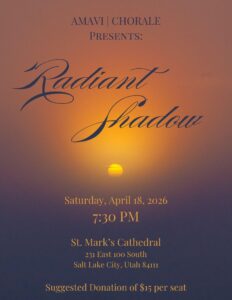
Artistic Staff & Guest Biographies
(Click name to expand)
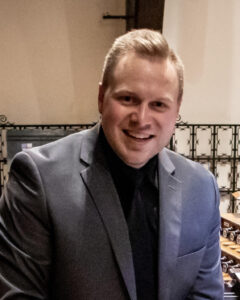
Conductor, organist, pianist, and vocalist. Adam’s deep passion for music began at a young age. His studies include the University of Utah where he studied organ under Dr. Kenneth Udy, sang as a member of the University of Utah Choirs under renowned Dr. Barlow Bradford; Utah Tech University studying organ under Jane Dye, and Dr. Geoffrey Myers; conducting mentorship under Dr. Paul Wein’s; and mentorship under Robert Reimer. In 2014, Adam had the distinct opportunity to travel to Europe to study under master organists, Margaret Phillips in London and Ullrich Bohme in Leipzig, Germany – in the historic St. Thomas Church (Thomaskirche).
During his nearly 20-year music career, he has taught piano and organ, conducted choirs and orchestras across Utah, played the organ numerous times both as recitalist and accompanist, and sang in several ensembles. In 2015, he was honored to be selected as a recitalist and organist in the Eucharistic services for the 2015 National Episcopal General Convention in Salt Lake City. Also in 2015, he was appointed as principal organist and assistant Artistic Director of Sterling Singers in Salt Lake City, Utah. While with Sterling Singers, he performed across northern Utah, including the historic Salt Lake Tabernacle. Appointed in 2014, Adam is currently an organist at St. Mark’s Cathedral in Salt Lake City, Utah. In 2018, Adam co-founded Amavi Chorale with a group of close friends. Since its founding, he has both conducted and accompanied the choir. In 2023, he was appointed as Artistic Director. In June 2023, Adam led Amavi in its 5th anniversary celebratory concert performing Gabriel Faure’s “Requiem” with orchestra and Organ in St. Mark’s Cathedral. He is excited for a bright future with Amavi Chorale!
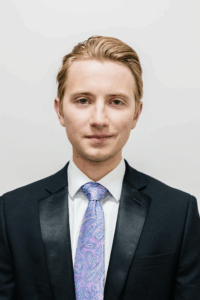
Benjamin Tischner is currently pursuing a Bachelor of Music in Organ Performance at Brigham Young University, where he is a student of Dr. Neil Harmon and is a Russell M. Nelson Presidential Scholar. Benjamin plans on pursuing a master’s degree in organ performance at BYU, beginning in Fall of 2026. Currently, Benjamin works as the University Carillonneur at the BYU Centennial Bell Tower, and is an organ scholar at St. Ambrose Catholic Church in Salt Lake City. Beyond performance, Benjamin is an active scholar with unique interests. In September 2024, he published “A Cultural Comparison of Poverty: Lessons from Denmark and the US” in The Bridge, the journal of the Danish American Heritage Society. He is also currently working on a project titled, “A Danish Romantic Organ Voice: The Music of J.P.E. Hartmann and the Marcussen & Søn Organ.” Benjamin is also an amateur runner and triathlete, and he and his wife, Olivia, live in Provo, UT, and enjoy traveling together.
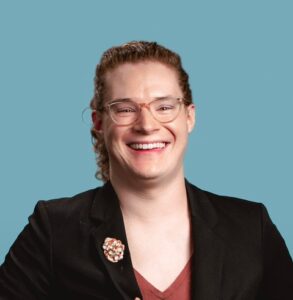
Evie Gilgen is an Early Music specialist and multi-instrumentalist from Salt Lake City, UT.
Primarily a gambist, historical cellist, and singer, Evie has performed with groups all over the Salt Lake Valley including Utopia Early Music, The Cathedral Church of St. Marks, Ballet West, Utah Symphony/Utah Opera, Opera Contempo, and Westminster University.
Equally at home on the podium, Evie has conducted choirs and orchestras at Westminster University and conducted the world premiere of Monica Hymas’ opera Butch Cassidy Hops a Train with Opera Contempo (2025).
Evie received a Bachelor of Arts in Music (2017) from Westminster University, and a Master of Music in Vocal Chamber Music (2021) from the University of Redlands, where she studied with former King’s Singer Christopher Gabbitas. On her rare night off Evie enjoys studying historical swordsmanship, watching sci-fi or fantasy movies, or playing Dungeons & Dragons with her partner Matthew and their two cats!

Grace Brigham is a soprano, composer, and violinist based in Salt Lake City, Utah. A dedicated choral artist, she has sung with ensembles including the St. Olaf Choir and began her musical life as a chorister at the Washington National Cathedral. She currently performs with Utah Chamber Artists and the Utah Choir Project.
Alongside her work as a singer, Grace is an accomplished composer whose music has received national recognition and international performances. Her piece “Sundowning” won the HerVoice Emerging Composers Competition, with the Chicago Classical Review praising its “graceful, overlapping vocal lines” and emotional depth. Her work “Discoveries” was named the winner of both the Cantus Young & Emerging Composer Competition and the Cathedral Choral Society Call for Scores. She has also received commissions from organizations including Women’s Voices Chorus, the Washington National Cathedral, Utah Chamber Artists, St. George Children’s Choir, Worcester Polytechnic Institute, Assumption University, Maple Mountain High School, and Herriman High School.
Originally from Washington, D.C., Grace holds degrees from St. Olaf College and the European American Musical Alliance. She lives in Salt Lake City with her fiancée and their two dogs, Jack and Penny.
Note from the conductor:
I have been thinking, for a long time now, about what it means to hold two things at once. Grief and gratitude. Darkness and light. The sense that something is broken and the quiet, stubborn certainty that something is also intact.
This concert is not about fixing anything. It is not a journey from sorrow into light — as though light were the destination and sorrow merely the road. What I have come to believe, and what I hope this music says more eloquently than I can, is that the light is already here. It has always been here. Woven into the ache, threaded through the grief, present in the very act of singing together in a room.
I named this program Radiant Shadow because I wanted to resist the easy answer. Life is murky. Loss is real. And yet — something glows within it. Not despite the darkness, but INSIDE it.
I want to tell you something about the people standing in front of you tonight.
In the weeks leading up to this concert, members of this choir have faced losses and hardships that would give any of us reason to go quiet — to step back, to close the door and tend to what is broken. Some of the things they are carrying are the kind that change a person permanently. The kind that arrives without warning and leaves the world looking different on the other side.
Some of our members cannot be here tonight because of it. Their chairs are empty, and we feel it. I am proud of this choir. I am proud of them for choosing to be human in front of you. For deciding that this — singing together, in the dark, toward something luminous — was worth showing up for.
Radiant Shadow is not a concept tonight. It is what we are all living. We are not here to resolve the tension between grief and beauty; Light and Darkness. We are here because that tension is real, and it is shared, and there is something quietly defiant about meeting it — and singing anyway.
Whatever you carried through that door tonight — you are not alone in it. Neither are we. This is why we sing.
— Adam Hansen, Artistic Director
Song for Athene - John Tavener
No preamble. No easing in. Tavener opens the door and walks straight into it: life a shadow and a dream. The Alleluia here is not a celebration — it is something that rises through grief because grief demands it. Weeping and praise are not opposites. Tonight, they are the same sound.

Chris Lecluyse, Soloist
Alleluia, Alleluia
May flights of angels sing thee to thy rest
Alleluia, Alleluia
Remember me O Lord, when you come into your kingdom
Alleluia, Alleluia
Give rest O Lord to your handmaid, who has fallen asleep
Alleluia, Alleluia
The Choir of Saints have found the well-spring of life and door of paradise
Alleluia, Alleluia
Life a shadow and a dream
Alleluia, Alleluia
Weeping at the grave creates the song
Alleluia
Come, enjoy rewards and crowns I have prepared for you
Alleluia, Alleluia, Alleluia
Only in Sleep - Eriks Esenvalds
We all know this feeling. The moment when waking life becomes too much — too loud, too heavy, too insistently present — and something in us reaches, quietly and without permission, for a place where things are softer. Where the people we have lost come back.
Where time has not yet done what time does. Teasdale names that place: sleep. Ešenvalds’ music lives entirely inside it — floating, unhurried, never quite landing. But the question rises and refuses to quiet itself: do they, too, dream of me? Even the escape is incomplete. And somehow, in naming that so honestly, it becomes just barely bearable.

Sara Teasdale, Text
Grace Brigham, Soloist
Only in sleep I see their faces Children I played with when I was a child Louise comes back with her brown hair braided Annie with ringlets warm and wild
Only in sleep Time is forgotten— What may have come to them, who can know? Yet we played last night as long ago And the doll-house stood at the turn of the stair
Only in sleep I see their faces Children I played with when I was a child Louise comes back with her brown hair braided Annie with ringlets warm and wild
Only in sleep Time is forgotten— What may have come to them, who can know? Yet we played last night as long ago And the doll-house stood at the turn of the stair
I met their eyes and found them mild— Do they, too, dream of me, I wonder And for them am I too a child?
Consolamini - B. E. Boykin
“Comfort ye, my people.” Not a solution. A companion. Boykin’s setting names sadness and fear before it offers anything — it does not skip to the answer. The comfort here is rhythmic, physical, insistent. It moves because real consolation is not passive. It leans in.

Comfort ye, comfort ye, my people,
my salvation shall not tarry:
why wilt thou waste away in sadness?
why hath sorrow seized thee?
Fear not, for I will save thee:
for I am the Lord thy God,
the Holy One of Israel, thy Redeemer.
Te Deum - Herbert Howells
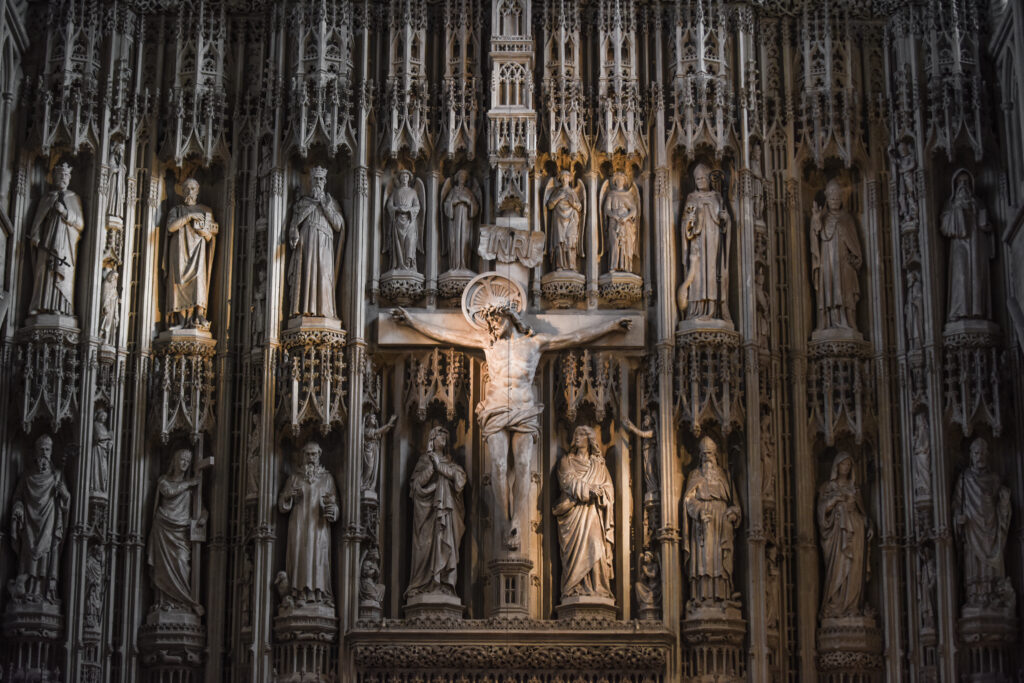
Howells asks the choir for everything — and tonight, this choir gives it. The harmonies are vast, luminous, at times almost unbearably beautiful.
This is communal praise forged from complexity, not detached from it. And still, even here, the final words are a plea: let me never be confounded. The grandeur does not erase the uncertainty. It holds it and sings anyway.
We praise thee, O God; we acknowledge thee to be the Lord.
All the earth doth worship thee; the Father everlasting.
To thee all angels cry aloud’ the Heavens and all the powers therein.
To thee Cherubim and Seraphim continually do cry,
Holy, Holy, Holy; Lord God of Sabaoth;
Heaven and earth are full of the Majesty of thy glory.
The glorious company of the Apostles praise thee.
The goodly fellowship of the Prophets praise thee.
The noble army of Martyrs praise thee.
The holy Church throughout all the world doth acknowledge thee;
The Father of an infinite Majesty;
The honorable, true and only Son;
Also the Holy Ghost: the Comforter.
Thou art the King of Glory: O Christ.
Thou art the everlasting Son of the Father.
When thou took’st upon thee to deliver man: thou didst not abhor the Virgin’s womb.
When thou hads’t overcome the sharpness of death: thou didst open the Kingdom of Heaven to all believers.
Thou sittest at the right hand of God: in the Glory of the Father.
We believe that thou shalt come to be our Judge.
We therefore pray thee, help thy servants: whom thou hast redeemed with thy precious blood.
Make them to be numbered with thy Saints: in glory everlasting.
Interlude - Sonata No. 1 in F minor
The choir steps back. The organ holds the space — grounded, patient, alone. A threshold between what has been spoken and what is still to come. Rest here. Breathe.
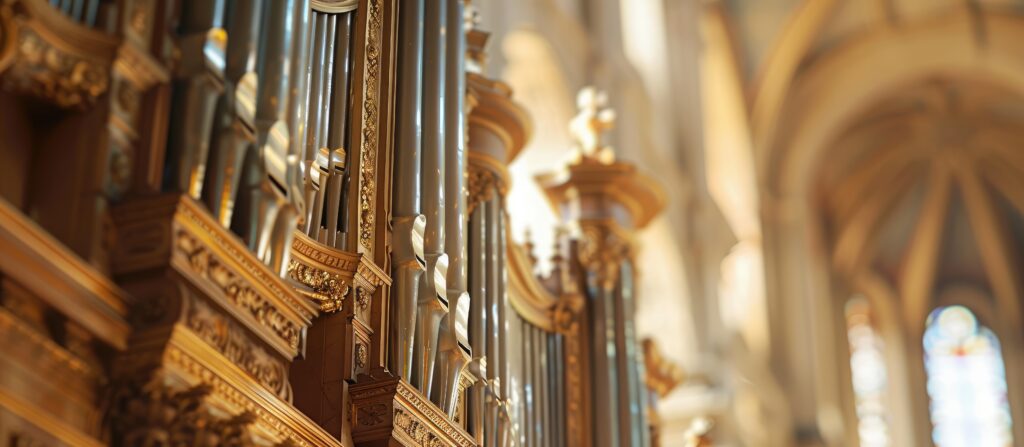
Movement IV by Felix Mendelssohn
Ben Tischner, Organ
Silver Rain - B. E. Boykin
The world does not pause for grief. Rain still falls. Butterflies still lift their wings. New leaves still find a way to sing. Boykin offers this not as comfort exactly, but as witness — look, life insists on itself. The wonder spreads whether we are ready for it. There is something almost defiant about beauty continuing.

Evie Gilgen, Cello
In time of Silver Rain, the earth puts forth new Life again,
Green Pastures Grow, and flowers lift their heads
In time of Silver Rain and all over the plain the wonder spreads
It Spreads of life!
In time of Silver Rain, the butterflies lift silken wings to catch a rainbow cry
And trees put forth new leaves to sing joy beneath the Sky of Life.
Magnificat and Nunc Dimittis in G - C. V. Stanford
Two canticles. One arc. The Magnificat is a declaration — bold, exultant, the order of things overturned: the mighty brought low, the humble lifted, the hungry filled.
Then the Nunc Dimittis exhales: Lord, now lettest thou thy servant depart in peace. Upheaval, then release. Proclamation, then surrender. This is the shape of a human life — and of this evening — held inside a single liturgical breath.

Chris Lecluyse, Soloist
Grace Brigham, Soloist
My soul doth magnify the Lord : and my spirit hath rejoiced in God my Saviour.
For he hath regarded the lowliness of his hand-maiden.
For behold, from henceforth all generations shall call me blessed.
For he that is mighty hath magnified me : and holy is his Name.
And his mercy is on them that fear him throughout all generations.
He hath shewed strength with his arm : he hath scattered the proud in the imagination of their hearts.
He hath put down the mighty from their seat and hath exalted the humble and meek.
He hath filled the hungry with good things and the rich he hath sent empty away.
He remembering his mercy hath holpen his servant Israel : as he promised to our forefathers, Abraham and his seed, for ever.
Glory be to the Father, and to the Son, and to the Holy Ghost;
As it was in the beginning, is now, and ever shall be : world without end. Amen.
Lord, now lettest thou thy servant depart in peace according to thy word.
For mine eyes have seen thy salvation,
Which thou hast prepared before the face of all people;
To be a light to lighten the Gentiles : and to be the glory of thy people Israel.
Glory be to the Father, and to the Son, and to the Holy Ghost;
As it was in the beginning, is now, and ever shall be : world without end. Amen.
It is Well with My Soul - arr. Mack Wilberg
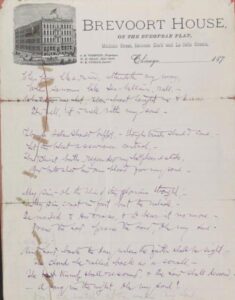
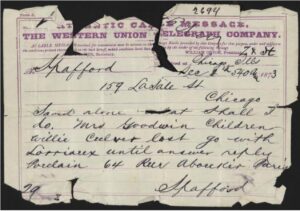
Horatio Spafford wrote these words after losing his daughters to the sea. Not after the grief had passed — from inside it. Whatever my lot, thou hast taught me to say: it is well.
This is where the program has always been going. Not to triumph. Not to resolution. To this: a person in the middle of the wreckage, choosing — somehow — to say it is well. That is not an easy word.
Tonight, this choir earns the right to sing it.



If you are interested in becoming an Amavi Affiliate or in making a one time donation, please click on the image above. Every dollar helps Amavi Chorale uplift our community.
*Amavi Chorale is a Tax Exempt Non-Profit Organization (NPO) under section 501(c)(3) of the Internal Revenue Code. All donations made to Amavi Chorale are Tax Deductible.